Why Rehab Cost Overruns Are the Biggest Threat to Flip Profitability
Rehab is the largest controllable variable in a flip. Acquisition is locked in by your MAO discipline. Disposition is set by the market. Rehab is where the project is actually won or lost, and it's also where most of the slippage happens.
The problem is compounding. Building material prices rose 3.5% year-over-year through November 2025, the largest annual increase since early 2023, with metal products up nearly 50%. Labor remains tight. Permitting cycles in most major flip markets have stretched. Every one of those pressures shows up in your rehab line, not someone else's.
Run the math on a representative deal. A $60K rehab budget with a 15% overrun is $9,000 gone. On a flip netting in the high 20s gross ROI before holding costs, $9,000 is often the entire net profit. The flipper finishes the project, pays the contractors, sells the house, and breaks even. That's a six-month commitment of capital, attention, and risk for nothing.
Most flippers track budget vs. actuals at the wrong intervals. Monthly reviews surface overruns after they're locked in. By the time the variance shows up in a spreadsheet, the materials are bought, the labor is paid, and the only option left is to absorb it. The flippers who hold the line review the numbers weekly, sometimes daily, and adjust scope before the overrun compounds.
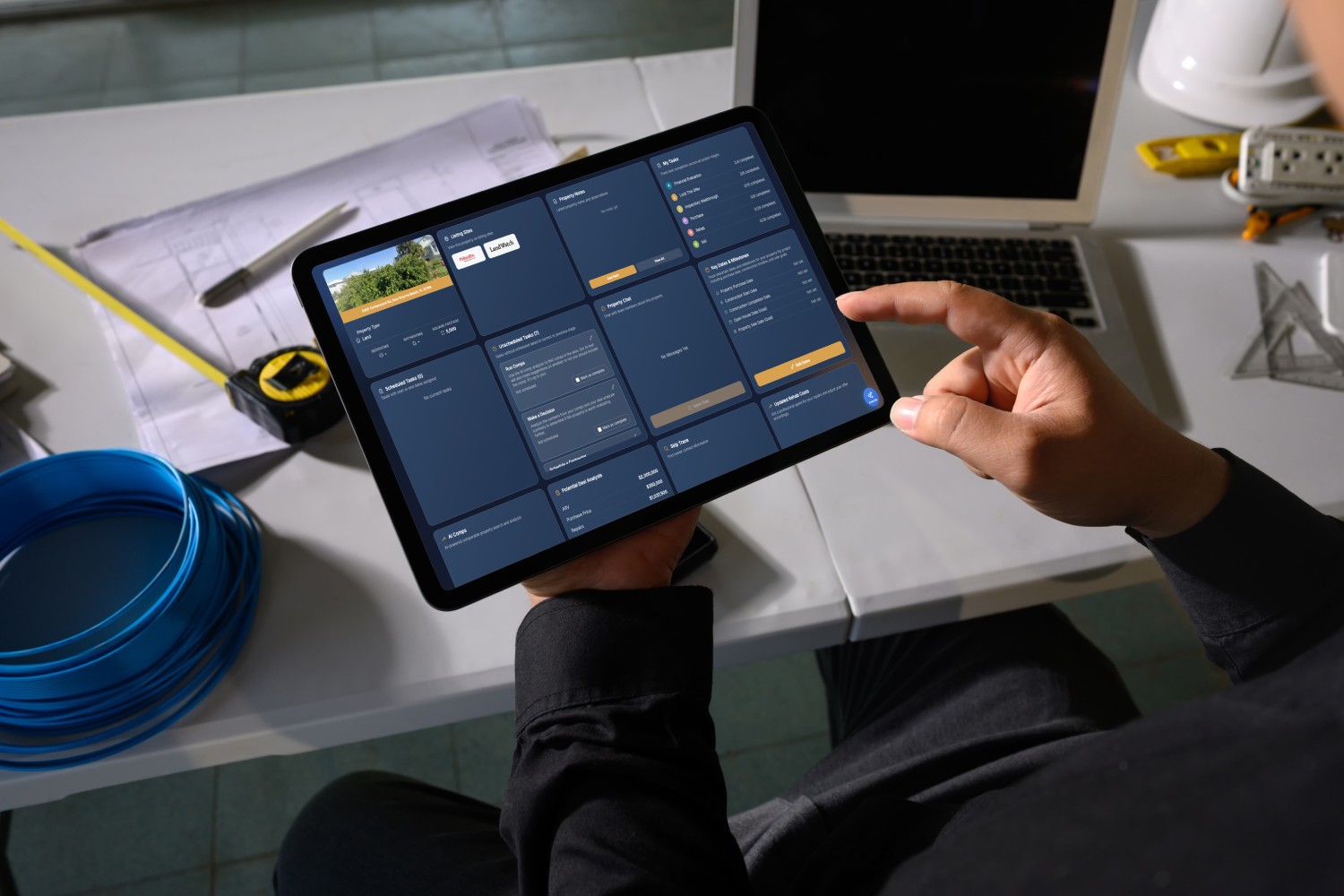
Weekly budget reviews catch overruns before they compound
What Causes Rehab Cost Overruns on a House Flip
Overruns rarely come from one big surprise. They come from five or six small ones that compound. Knowing the categories ahead of time is what lets you build controls against them.
Under-scoped initial inspections. Most overruns start before close. A walk-through inspection catches what's visible. It misses what's behind drywall, under flooring, and inside mechanical systems. Pre-1980 builds are the worst offenders. Knob-and-tube wiring, cast iron drain lines, asbestos, and undersized service panels show up after demo, not before.
Scope creep. The kitchen was supposed to get a paint-and-hardware refresh. Now it's getting new cabinets because the existing ones don't pencil with the comps. Every "while we're in there" decision is an overrun in slow motion. Scope creep is the only category fully under your control, and it's the one most flippers lose to anyway.
Change orders without paper. A contractor mentions an extra during a walk-through. You nod. Three weeks later, the invoice has $4,200 you didn't formally approve. If the change order isn't written, signed, and priced before the work happens, it's not a change order. It's a dispute waiting to happen.
Material price volatility. The estimate locked Tuesday. The supply house is quoting 6% higher on Friday. Without a price-lock or a staged purchase plan, your budget absorbs the difference.
Labor scheduling gaps. Subs run multiple jobs. A two-week delay in framing pushes electrical, which pushes drywall, which pushes everything downstream. Every gap is a holding cost.
What Causes Rehab Cost Overruns on a House Flip?
Rehab cost overruns on a house flip are typically caused by under-scoped initial inspections that miss structural, mechanical, or code issues, scope creep from mid-project upgrades, contractor change orders without written approval, material price increases between estimate and purchase, and labor scheduling gaps that extend the timeline and inflate holding costs.
How Delays Turn Into Dollars: The True Cost of a Slow Rehab
Most flippers track rehab cost overruns. Far fewer track timeline overruns with the same rigor, even though every extra day on the calendar is a line item nobody put in the budget.
ATTOM data shows the average flip took 164 days from purchase to resale in Q1 2025. That's the baseline. Every 30 days past it costs real money across multiple categories.
Loan interest. Hard money rates typically run 9% to 16% on fix-and-flip financing. At 11% on a $250,000 balance, you're burning roughly $2,300 in interest every 30 days. Two months over schedule is $4,600 off the top of your net.
Vacant dwelling insurance. Premiums for vacant properties run 50% to 60% higher than standard homeowner policies, per the Insurance Information Institute. That premium prorates daily. Every extra month on the project is a meaningful addition to your insurance line, and the markup compounds in coastal and wildfire markets where base premiums are already elevated.
Property taxes. Easy to overlook on a short timeline, real money on longer ones. Tax accrues whether you're working on the property or not.
Utilities. Power for tools and HVAC, water for crews, or gas for testing. Modest monthly cost, but it's another line that doesn't pause when the project does.
Lender extension fees. This is the biggest avoidable expense. Most hard money lenders charge 1 to 3 points to extend a loan past its original term. On a $250,000 loan, that's $2,500 to $7,500 in cash, paid just to keep the loan alive while you finish.
Opportunity cost. Capital tied up in a slow project isn't earning on the next one. A flipper running four deals a year can't absorb a six-month project without giving up the next slot.
The point isn't that any one of these line items breaks the deal. It's that they all run simultaneously, every day past your target close, and the total compounds faster than the rehab variance most flippers obsess over.
Track Every Dollar in Real Time
FlipProfitPro tracks rehab spend against your budget in real time, flagging variances at the line-item level before overruns compound into margin killers.
How Experienced Flippers Keep Rehab Budgets Under Control
The flippers who consistently hit margin aren't running better contractors. They're running better systems. These are the controls that hold the line on a typical rehab.
Pre-acquisition scope of work. Written, line-itemed, and signed by your GC before you close. Walking a property with a clipboard isn't a scope. A scope lists every task, every material spec, and every dollar amount, and it gets agreed to in writing. If the GC won't sign one before close, that tells you what working with them mid-project will look like.
Fixed-price contracts wherever possible. Time-and-materials should be the exception, reserved for true unknowns like foundation or unknown subfloor conditions. Cap T&M line items in writing. Open-ended labor billing is how a $4,200 plumbing rough-in becomes $7,800 by the time the inspector signs off.
Funded contingency, separate from the budget. 10% minimum on anything post-1980, 15% on older builds. The contingency lives in a separate line on the deal pro forma, not buried inside the rehab number. If you fold it in, you'll spend it on scope creep instead of saving it for actual surprises.
Change order discipline. No verbal approvals. No work performed before a signed change order with the price attached. The contractor who pushes back on this process is the contractor who plans to bill you for unapproved work. Treat the policy as non-negotiable from day one.
Weekly budget vs. actuals review. Not monthly. Monthly variance reports tell you what has already happened. Weekly reviews catch a category trending over before it locks in. Pull receipts, match them to the line item, and flag anything tracking above plan.
Staged material orders. Lock long-lead items early. Cabinets, windows, custom doors, and specialty fixtures see the most price volatility and the longest lead times. Order them when the scope is finalized, not when the framing is done.
None of this requires a bigger team or a fancier contractor. It requires writing things down before they happen and reviewing them while you can still change the answer.
Systematic controls keep rehab projects on budget
How Real-Time Budget Tracking Prevents Overruns Before They Happen
The controls in the last section only work if the data keeps up. Most flippers track rehab spend in spreadsheets that get updated when there's time, not when the spend happens. The variance shows up in a cell days or weeks after the materials were bought and the labor was paid, which is exactly long enough for a small overrun to compound into a real one.
The flippers who don't run overruns aren't more disciplined in the abstract. They have visibility on the spend the day it hits, not at month-end. A $1,200 plumbing line item trending 30% over is a fixable problem on Tuesday. By Friday, the rough-in is done, and you're absorbing the variance.
Software like FlipProfitPro tracks rehab spend against your budget in real time, flagging variances at the line-item level and alerting you when a category is trending over before the overrun is locked in. The point isn't more dashboards. It's catching the problem during the window where you can still change the answer.
Visibility is the cheapest form of cost control. Every system depends on it.
Stop Rehab Overruns Before Your Project Breaks Ground
Cost overruns aren't a contractor's problem. They're a system problem. The flippers who finish on budget aren't getting better surprises. They scoped tighter, contracted cleaner, watched the numbers daily, and treated every change order as a financial decision.
The work happens before the demo starts. A signed scope, a funded contingency, a written change order policy, and a tracking system that surfaces variance the day it happens. None of that costs more than running a project blind. It just requires the discipline to put the controls in place when there's no fire to fight yet.
Get the scope right. Lock the contracts. Watch the numbers. Start your 14-day free trial of FlipProfitPro and run your next rehab with the visibility your margins actually need.
Frequently Asked Questions About Rehab Cost Overruns
What is a normal contingency budget for a house flip rehab?
10% of the rehab budget is the floor for a property built after 1980. For older builds, plan on 15%. The contingency should be funded and tracked separately from the rehab line, not folded into it. If it lives inside the rehab number, it gets spent on scope creep instead of being held for actual surprises.
How do you handle a contractor who goes over budget?
Stop the work, review the scope and signed change orders, and identify exactly where the variance came from. If the overage is unapproved, the contractor absorbs it or eats the difference on the next phase. If you authorized the work without paper, that's a process failure on your end. Either way, document the resolution in writing.
What is a scope of work, and why does it matter?
A scope of work is a written, line-itemed document listing every task, every material spec, and every dollar amount in the rehab. It matters because it's the only objective reference point when a dispute comes up mid-project. Without it, every disagreement becomes a he-said negotiation, and you usually lose.
What is the difference between a fixed-price and a time-and-materials contract?
A fixed-price contract sets a total dollar amount for a defined scope. The contractor absorbs overages on labor or materials. Time-and-materials bills actual hours and actual material costs, with the risk on you. Fixed-price is the default for a known scope. T&M is for true unknowns like a foundation or a rotted subfloor, and it should always have a written cap.
Can rehab cost overruns affect my ability to get future hard money loans?
Yes. Hard money lenders track project performance. Repeated overruns and timeline slips show up in your loan history and affect future terms, including LTV, points, and rate. Lenders fund operators that they can predict. A clean project history is leveraged on the next deal.