Underwriters don't read your deal package the way you wrote it. They scan it in two minutes, looking for three things: can this operator finish the project, is the ARV realistic, and how does the loan get repaid if something breaks. Most flippers spend 80% of their package selling the property. Lenders score it the other way around.
The funded deals come from operators who built packages that answer the underwriter's questions before they're asked. This blog covers what hard money lenders actually look for, the five components every package needs, why live reporting is starting to win over static PDFs, and how to present a deal for a faster yes.
Why Most Fix and Flip Funding Requests Get Rejected
A hard money underwriter looks at dozens of packages a week. The math on most of them works on paper. The reason a deal still gets declined usually has nothing to do with the property.
It's the operator. Or more specifically, the lender's inability to confidently answer one question: will this person finish the project on budget and on time? Lenders are pricing exposure, not opportunity. Most fix-and-flip loans cap leverage at 70% to 75% of after-repair value, which means the lender's downside is everything below that line. The package needs to convince them that the line will never get tested.
Three failure patterns keep popping up. A property summary that runs four pages, while the operator's track record runs two paragraphs. ARV comps pulled from auto-comp tools instead of real sold transactions. A rehab budget delivered as a single lump sum instead of a line-itemed scope. Each of those signals the same thing to an underwriter: this borrower hasn't run a tight project before, or they're not going to run this one tight either.
The fix isn't a better property. It's a better package. The same deal, presented with operator credibility and an underwriter-friendly structure, gets funded on terms a sloppy package would be rejected on.
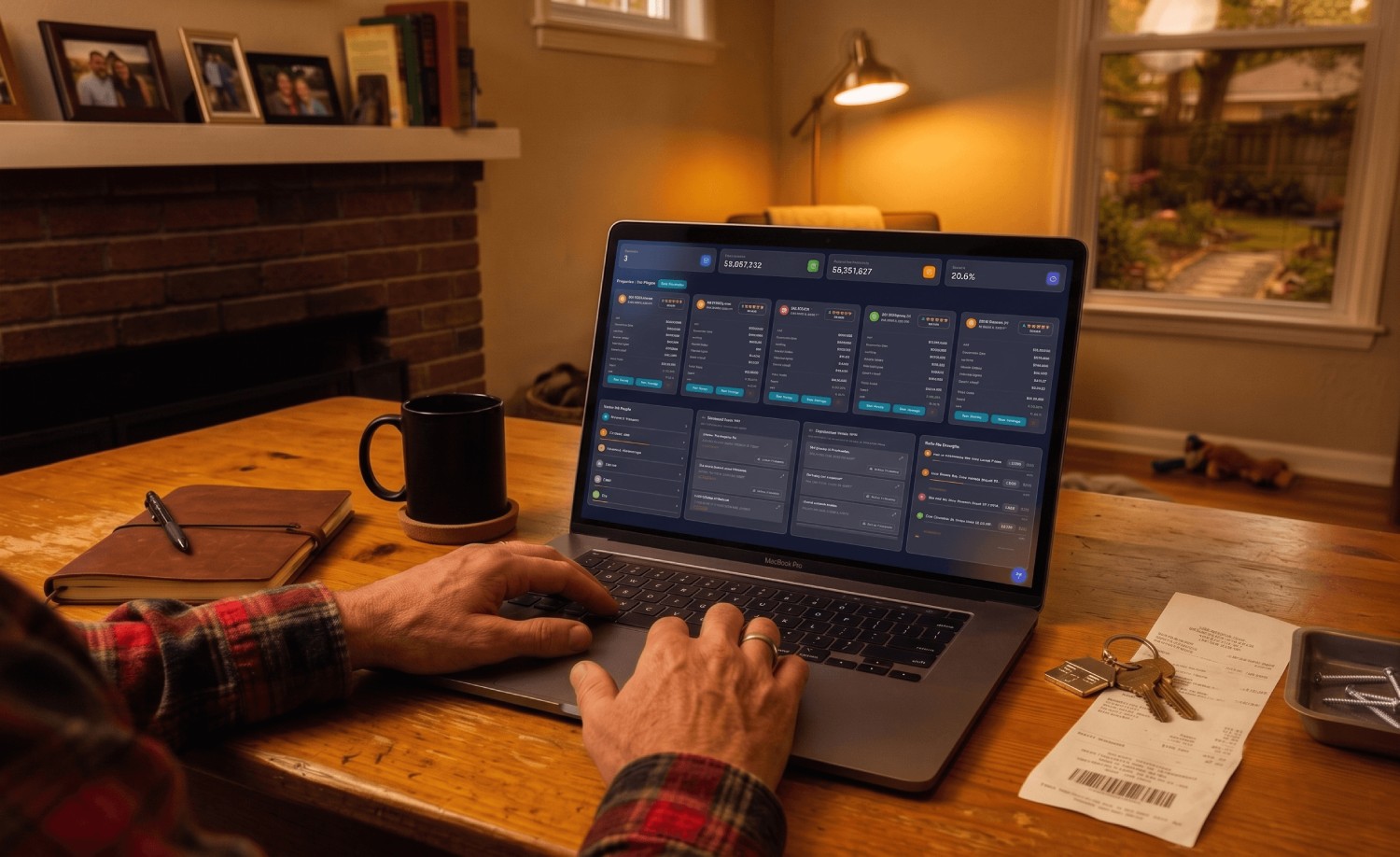
A well-structured deal package answers lender questions before they're asked
What Hard Money Lenders Actually Look for in a Deal
Underwriters evaluate four things, in this order: who's borrowing, what's the deal, what's the property risk, and how does the loan get paid back. Every component of your package should answer one of those four questions cleanly.
Operator track record. Past flips completed, average time from acquisition to exit, average ROI, and how often projected ARV matched actual sale price. A first-time flipper isn't disqualified, but the package has to compensate with a stronger team, more cash in the deal, or a more conservative LTV ask.
Deal economics. Purchase price relative to ARV, rehab budget realism, projected net profit, and the cushion between the loan amount and ARV. Lenders want to see a deal that still works if the ARV comes in 5% to 10% under projection. Margins that depend on best-case execution don't fund.
Property risk. Neighborhood comps, exit market liquidity, condition relative to scope, and any zoning or title issues that could complicate a clean resale. A great deal in a thin market is still a thin market.
Repayment path. Primary exit is the sale. Secondary exit is the refinance to a rental hold if the market shifts mid-project. Lenders want to see both modeled, not just the optimistic one.
What Do Hard Money Lenders Look for in a Deal Package?
Hard money lenders evaluate four factors in a fix-and-flip deal package: operator track record (completed flips and exit performance), deal economics (purchase price, rehab budget, and projected ARV), property risk (condition, comps, and exit market), and repayment path (primary sale exit plus a backup strategy). Lenders fund operators, not just properties.
The Five Components Every Fix and Flip Deal Package Needs
A funded package answers every underwriter question without requiring a follow-up email. Five components, in this order.
-
Property summary with photos. Address, current condition, neighborhood profile, and recent sales activity within 0.5 miles. Include exterior, interior, and any obvious problem areas. Hiding deferred maintenance in the photo set is the fastest way to lose lender trust on every future deal.
-
ARV analysis backed by three to five real comps. Sold within 90 days, within 0.5 miles, similar GLA, bed/bath count, and finish level. Pulled from MLS or county records, not Zestimate or auto-comp aggregators. Include the data, the adjustments, and the median value you're using. Show your work the same way the appraiser will have to.
-
Itemized rehab scope and budget. Line-item by category: demo, framing, mechanicals, drywall, flooring, kitchen, baths, exterior, contingency. Signed by your GC if possible. A lump-sum rehab number tells the lender you haven't actually scoped the work, which is the single most common reason a package gets sent back for revisions.
-
Operator profile. Flips completed, average days to exit, average ROI, and a one-page case study from your most recent comparable deal. If you're new, lead with team experience — your GC's track record, your agent's local sales volume, your inspector's credentials. A first-time flipper with a strong team and conservative numbers funds. A first-time flipper with aggressive numbers and no team doesn't.
-
Pro forma with primary and secondary exits. Sale model and rental hold model side-by-side. The sale model shows your base case. The rental model shows what happens if you refi out of the hard-money loan and hold for 12 to 18 months. Lenders want to see that you've thought about what happens when the plan changes.
Static Reports vs Live Deal Packages: What Lenders Actually Trust
The standard fix-and-flip package has been the same for years. A PDF with property photos, an ARV pulled from comps current on the day the document was generated, a rehab budget reflecting scope as of that morning, and a pro forma built on numbers that went stale the moment the file was emailed.
That format is starting to lose ground for one reason: the data ages faster than the underwriting cycle. Comps go stale within 30 to 60 days. Rehab numbers shift the first time a change order hits. A pro forma that was tight on Monday can be soft by Friday. The lender either has to ask for updates, slowing the process, or fund off data that's already wrong.
Live deal packages solve all three. Comps refresh automatically. Rehab spend updates as receipts and change orders hit. Pro formas recalculate when any input changes. The lender pulls current data on their schedule instead of waiting for the operator to resend the file.
Build Deal Packages That Get Funded
FlipProfitPro generates live deal packages that update automatically as comps refresh and rehab numbers change, giving lenders the visibility they need without the back-and-forth that slows traditional underwriting.
The lenders who see those packages first start to expect them. The operators who deliver them start getting faster decisions and, often, better terms.
Static packages aren't broken. They're just one cycle behind, and in a tight-margin environment, that cycle costs real money on every deal.

Present your deals with the credibility lenders trust
How to Present Your Deal So Hard Money Lenders Say Yes Faster
Underwriters don't read packages. They scan them. Build for the scan.
Lead with the operator, not the property. Page one should answer who the lender is lending to. Track record, completed flips, average exit performance. The property pitch follows the borrower passing the credibility test.
Put the numbers up front. ARV, purchase price, rehab budget, projected net, LTV, LTC, and exit timeline on a single summary page. If the underwriter has to hunt for the headline numbers, the package is already losing.
One page per pillar. Operator, property, economics, exit. Anything longer gets skimmed, and the details that matter get missed.
Anticipate the objection. If your comp set is thinner than ideal, address it. If the rehab budget is aggressive for the scope, explain why. If your exit timeline is tight, show the contingency. Underwriters trust operators who name the risk before they have to ask.
Format for the underwriter's workflow. If the lender's team works in spreadsheets, send a spreadsheet. If they work in a portal, upload the components in the format the portal expects. Friction in the delivery format is friction in the decision.
Every step you remove from the underwriter's process is time shaved off your funding timeline. Same deal, presented cleanly, often closes a full week faster than the same deal presented as a 14-page narrative PDF.
Your Deal Package Tells Lenders How You Run Your Business
Underwriters don't just evaluate the deal in front of them. They evaluate the operator they're about to start a relationship with. A sloppy package signals sloppy execution. A clean one signals an operator who runs tight projects, manages contractors, and watches the numbers.
That signal compounds. Lenders fund operators that they can predict. The flipper who delivers a polished package on the first deal gets faster decisions on the second, better terms on the third, and a relationship that scales past the standard LTV cap by deal five or six.
Build the package the lender wants. Run the project, the package promises. Start your 14-day free trial of FlipProfitPro and present every deal with the operator credibility lenders actually fund.
Frequently Asked Questions About Hard Money Deal Packages
What is a hard money loan, and how is it different from a conventional mortgage?
A hard money loan is a short-term, asset-based loan used by real estate investors to acquire and rehab properties. Conventional mortgages primarily underwrite the borrower's income and credit. Hard money loans underwrite the property's after-repair value and the operator's execution capacity. Terms are usually 6 to 24 months, rates run higher, and approval is faster.
What is LTV and LTC, and why do hard money lenders use both?
LTV (loan-to-value) measures the loan amount relative to the property's value. LTC (loan-to-cost) measures the loan amount relative to the total project cost, including rehab. Hard money lenders use both because LTV protects against ARV overestimation and LTC ensures the operator has skin in the game. Most fix-and-flip loans cap at 70% to 75% LTV of ARV and 75% to 90% LTC.
How many comparable sales should I include in a deal package?
Three to five. Sold within 90 days, within 0.5 miles, similar GLA, bed/bath count, and finish level. Fewer than three reads as cherry-picking. More than five reads as padding. Include the data, the adjustments, and the median you're using for ARV.
Do I need a contractor's bid before approaching a hard money lender?
Yes, for any deal beyond cosmetic work. A signed contractor bid validates your rehab number and signals you've scoped the project before asking for capital. Lump-sum rehab estimates without a contractor bid are the most common reason a package gets sent back for revisions.
Can a first-time flipper qualify for hard money financing?
Yes. First-time flippers typically face lower LTV caps, higher interest rates, and stricter documentation requirements. Compensating factors include a strong GC with a verifiable track record, more cash in the deal, conservative ARV projections, and a clear secondary exit. Lead the package with team experience, not personal experience.